
The same question comes up in different teams
Engineering knows which motor fits which configuration. Sales has a list of choices. The production uses a bill of materials. When these are maintained separately, one team may know about a product change while another does not.
CLM means Configuration Lifecycle Management. It concerns managing and reusing configuration knowledge throughout a product’s lifecycle. CPQ uses that knowledge to configure, price and quote. CLM also considers its governance, release and use beyond sales.
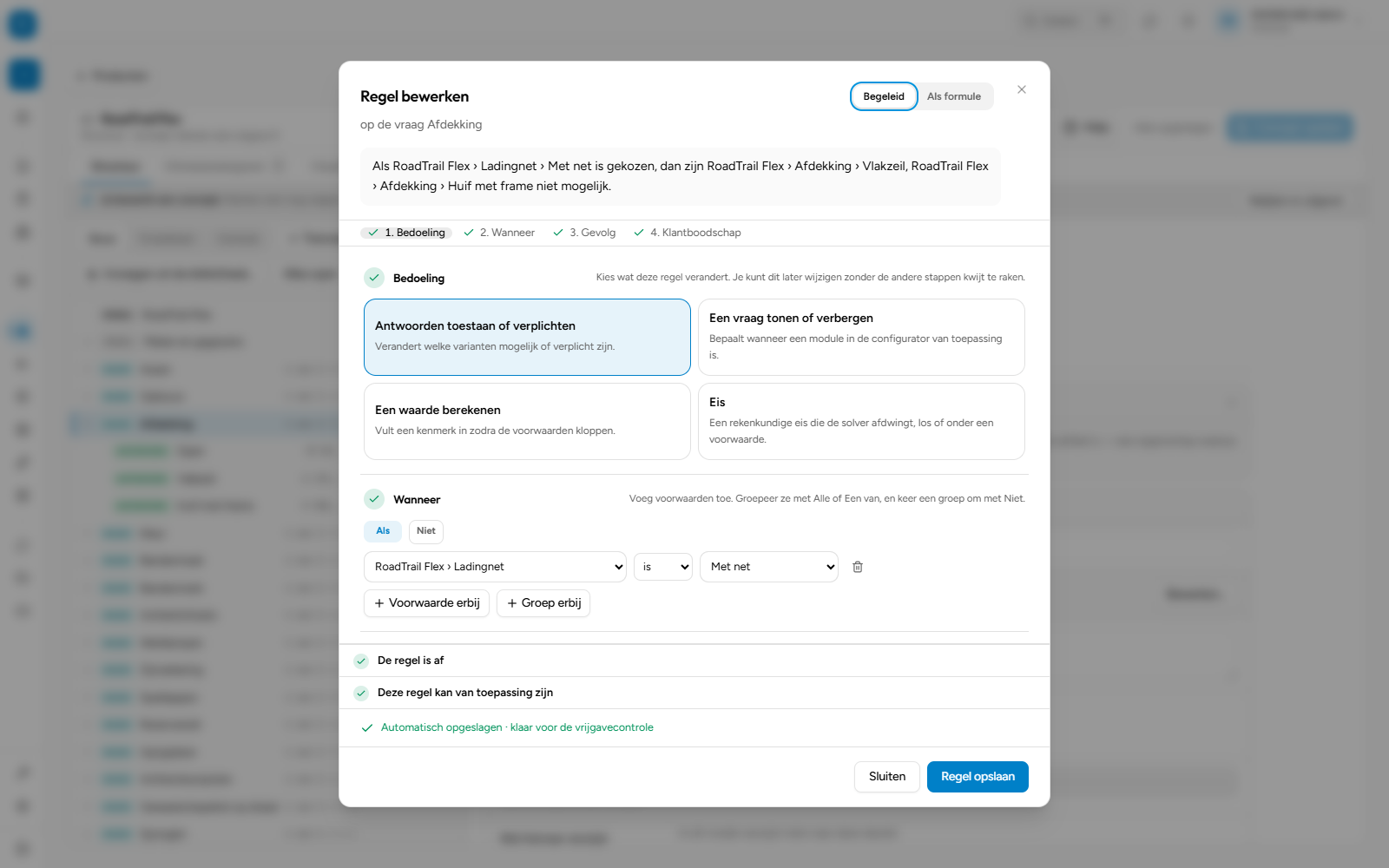
Explore the product model →
Where RulePro already contributes
RulePro captures choices, rules, calculations and parts in a product model. You release versions for use. A configuration can feed the quote, bill of materials and supporting documents. When an order changes, the previous agreement remains available.
The trailer example makes this tangible. An extra half metre of loading length changes the profile lengths and updated production preparation. The original order is retained.
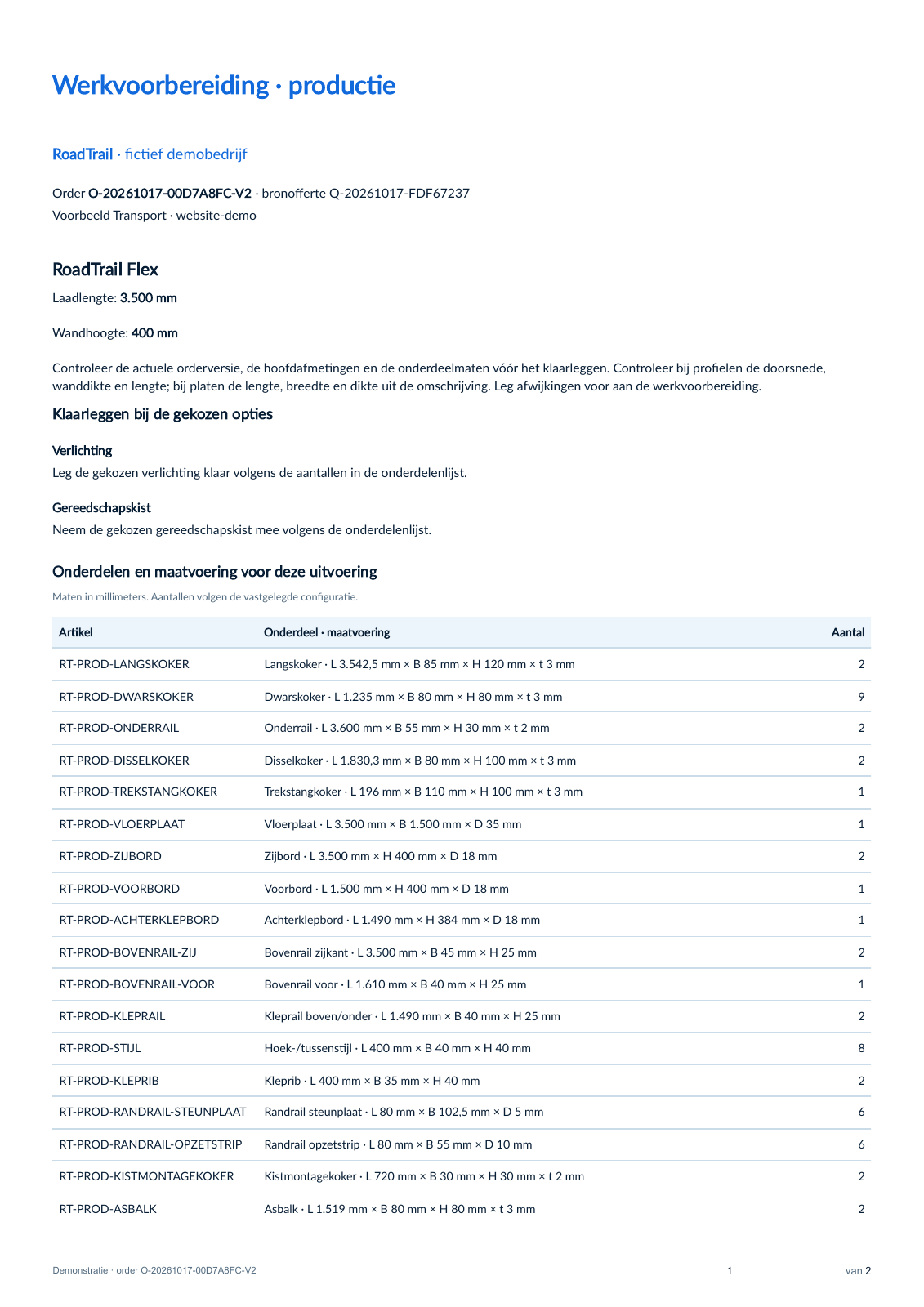
Follow the order change →
PLM, RulePro and ERP each have a role
PLM can manage product data and engineering structures. RulePro captures the relationships between choices and rules. ERP handles articles, costs and orders. API integrations define which data moves between them and which system remains the source.
You do not need to connect every system at once. Start with one product line and a useful application. A 3D model is optional too.
A direction to grow in
RulePro is growing from configuration and quoting towards broader management of configuration knowledge. It does not yet cover every part of CLM. Service configuration, installed-base management and enterprise-wide lifecycle governance require their own development.
In an initial conversation, we look at information maintained more than once, difficult product changes and what RulePro can help with today.
Further reading
Explore the complete RulePro example, or read how Tacton and Configit describe Configuration Lifecycle Management.